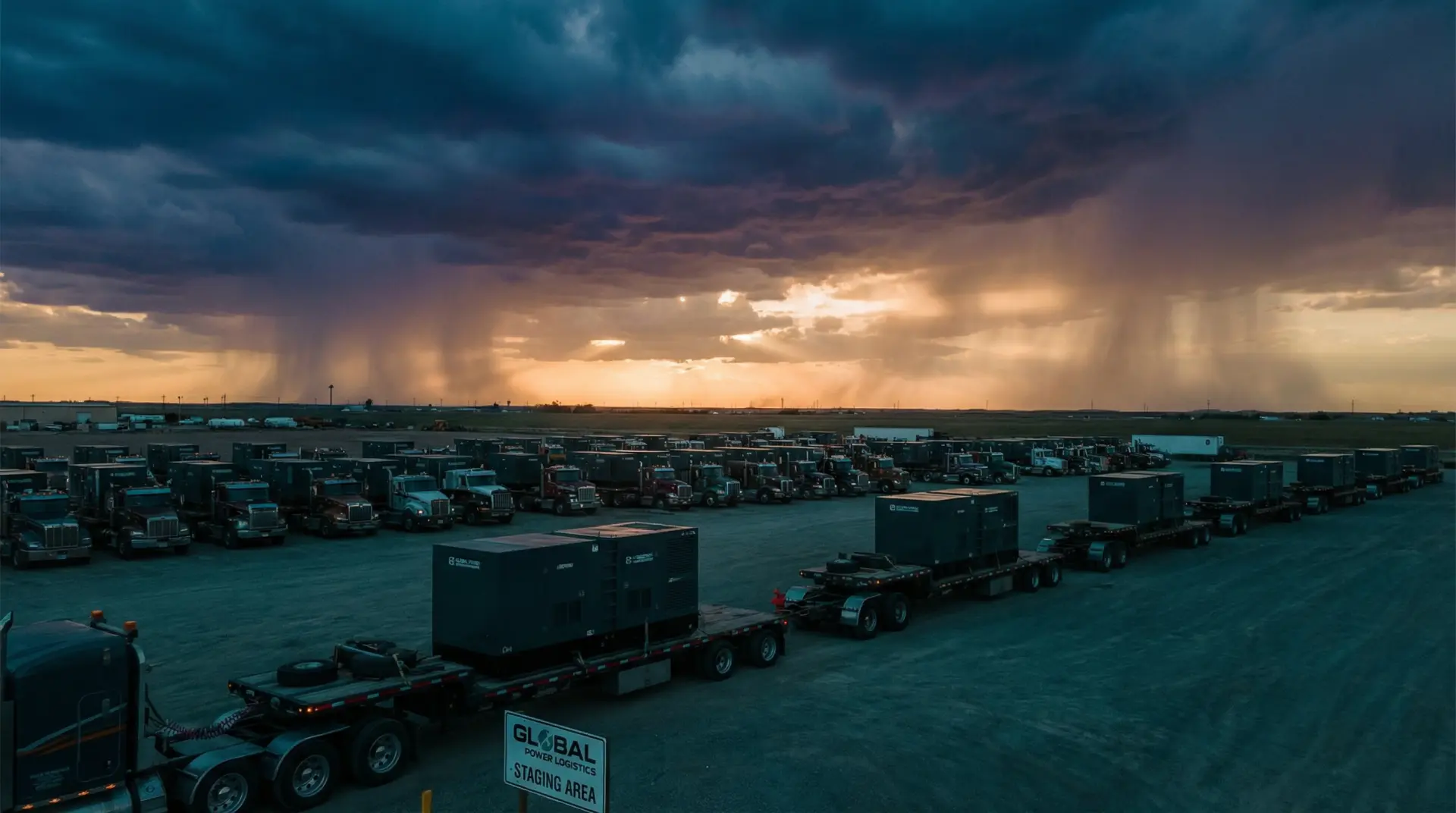
Hurricane Response
We Turn The Lights Back On
One-Screen Summary
Everything a CIM reader needs to know, scannable in under 60 seconds.
Context
The situation that demanded action
When major hurricanes strike the Gulf Coast and Southeastern United States, communities lose power—hospitals go dark, emergency services struggle, families are left in the dark.
Stakes
What was at risk if we failed
25+ truckloads of critical equipment needed to reach staging sites before restoration crews arrived.
Constraints
The obstacles we had to navigate
- 72-hour deployment window with zero flexibility
- 25+ loads requiring simultaneous coordination
- Carrier scarcity: most capacity already committed to storm response
- Route uncertainty: road closures, flooding, debris
What Core Did
Our execution approach
- Activated emergency carrier network within 4 hours of intake
- Secured 25+ qualified flatbed carriers through relationship-based outreach
- Developed dynamic routing plans with real-time road condition monitoring
- Coordinated staging site access with emergency operations coordinators
Outcomes
Measurable results delivered
- All loads delivered within the 72-hour window
- Zero equipment damage or loss
- Zero loads missed staging deadlines
- Client restoration operations began on schedule
What This Proves
- Core's relationship-based carrier network activates when spot markets fail
- Multi-load coordination at scale is a repeatable capability
- Dynamic routing and contingency planning prevent delays in uncertain conditions
The Challenge
When major hurricanes strike the Gulf Coast and Southeastern United States, communities lose power—hospitals go dark, emergency services struggle, families are left in the dark.
A major utility contractor required immediate deployment of generators and power equipment to support restoration efforts.
25+ truckloads of critical equipment needed to reach staging sites before restoration crews arrived.
Standard logistics channels were overwhelmed; carriers were scarce, and routes were compromised by storm damage.
The Obstacles
- 72-hour deployment window with zero flexibility
- 25+ loads requiring simultaneous coordination
- Carrier scarcity: most capacity already committed to storm response
- Route uncertainty: road closures, flooding, debris
- Staging site access windows limited by emergency operations
- Equipment must arrive before crews—sequencing is critical
- No tolerance for equipment damage during transport
The Execution
Activated emergency carrier network within 4 hours of intake
Secured 25+ qualified flatbed carriers through relationship-based outreach
Developed dynamic routing plans with real-time road condition monitoring
Coordinated staging site access with emergency operations coordinators
Implemented 4-hour status update cadence with client operations team
Established equipment inspection protocol at origin and destination
Created contingency plans for each route with backup carriers on standby
How It Unfolded
The Outcome
- All loads delivered within the 72-hour window
- Zero equipment damage or loss
- Zero loads missed staging deadlines
- Client restoration operations began on schedule
- Established Core as go-to partner for future emergency deployments
What This Proves
- Core's relationship-based carrier network activates when spot markets fail
- Multi-load coordination at scale is a repeatable capability
- Dynamic routing and contingency planning prevent delays in uncertain conditions
- Emergency logistics requires discipline, not heroics—playbooks work
"When the storm hit, we needed a partner who could move fast and execute flawlessly. Core delivered every single load on time, with zero damage. That's the kind of performance that earns trust."
These metrics are designed for CIM readers: what happened, how fast, and why it matters.